

A 72-hour outage is a storage problem: buy enough battery and you ride it out. A seven-day outage is a generation problem, and that difference changes everything about how you size the system. Nobody solves a week with batteries alone — the capacity required is absurd, and it sits idle for years between events.
Why battery-only stops working
Take a typical critical load of 6 kWh a day — fridge, freezer, lights, Wi-Fi, phone charging, a well pump and some heating circulation.
| Duration | Usable battery needed | Roughly equivalent to | Indicative cost |
|---|---|---|---|
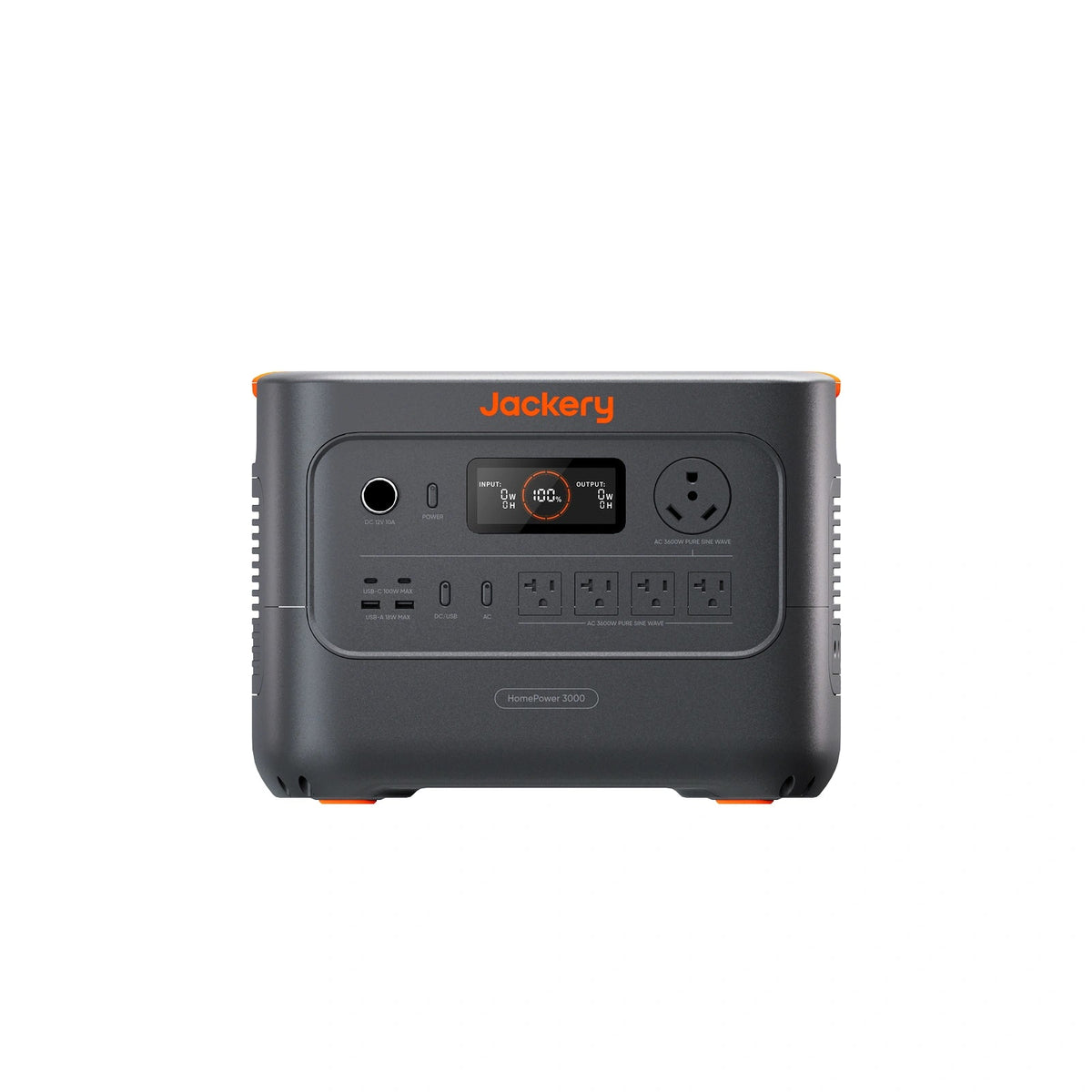
| 1 day | 6 kWh | Two large power stations | $2,500 – $3,500 |
| 3 days | 18 kWh | Powerwall-class system | $15,000 – $25,000 |
| 7 days | 42 kWh | Three Powerwall-class units | $40,000 – $60,000 |
That last row is the point. Forty-two kilowatt-hours of storage to cover an event that might happen once a decade is not a rational purchase for almost anyone. The alternative is to size the battery for one to two days and make the array large enough to refill it every day.
The sizing rule for a week
Daily solar production must exceed daily consumption, with margin for bad days. Once that holds, the outage length stops mattering — seven days and thirty days are the same system.
For 6 kWh a day of consumption, at 4.5 peak sun hours and a 0.75 real-world derate:
6,000 Wh ÷ (4.5 × 0.75) = 1,780W of array just to break even on a good day.
Break-even is not enough. Weeks containing a multi-day outage tend to contain bad weather, so size at 1.5 to 2x the break-even figure — roughly 2,700 to 3,600W — so a poor day still gets you most of the way and a good day rebuilds the reserve.
| Daily critical load | Break-even array | Recommended array | Battery (2 days) |
|---|---|---|---|
| 3 kWh (minimal: fridge, lights, devices) | 890 W | 1,400 – 1,800 W | 6 kWh |
| 6 kWh (typical critical loads) | 1,780 W | 2,700 – 3,600 W | 12 kWh |
| 10 kWh (+ heating, well, freezer) | 2,960 W | 4,500 – 6,000 W | 20 kWh |
Reduce the load before you buy the array
Every 1 kWh you remove from daily consumption saves roughly 300-450W of array and about 2 kWh of battery. Over a week that compounds hard, and load reduction is far cheaper than generation:
- Consolidate cold storage. Move everything into one appliance and let the other warm up — running one fridge instead of a fridge and a freezer can save 1 kWh a day.
- Accept a warmer or cooler house. Heating and cooling dominate any load list that includes them.
- Charge devices during peak sun, not from the battery at night.
- Drop anything that is comfort rather than necessity for the duration — a week is long enough that the distinction becomes real.
The winter problem, stated plainly
Week-long outages cluster in winter storms, which is precisely when solar performs worst: sun hours can halve, panels may be under snow, and the heating load roughly doubles the consumption you are trying to cover. A system that comfortably handles a week in July may cover two days in January.
If your realistic risk is a winter event, either size the array against December sun hours rather than the annual average — which often doubles the array — or plan a hybrid setup with a generator, which is substantially cheaper for the same reliability. This is covered in more depth in why off-grid systems that work in July fail in January.
Start by building an accurate critical-load list with our free wattage calculator, and if your planning horizon is shorter, the three-day version of this math is in solar and battery sizing for a 72-hour outage. The power outage checklist covers everything that is not electrical.