

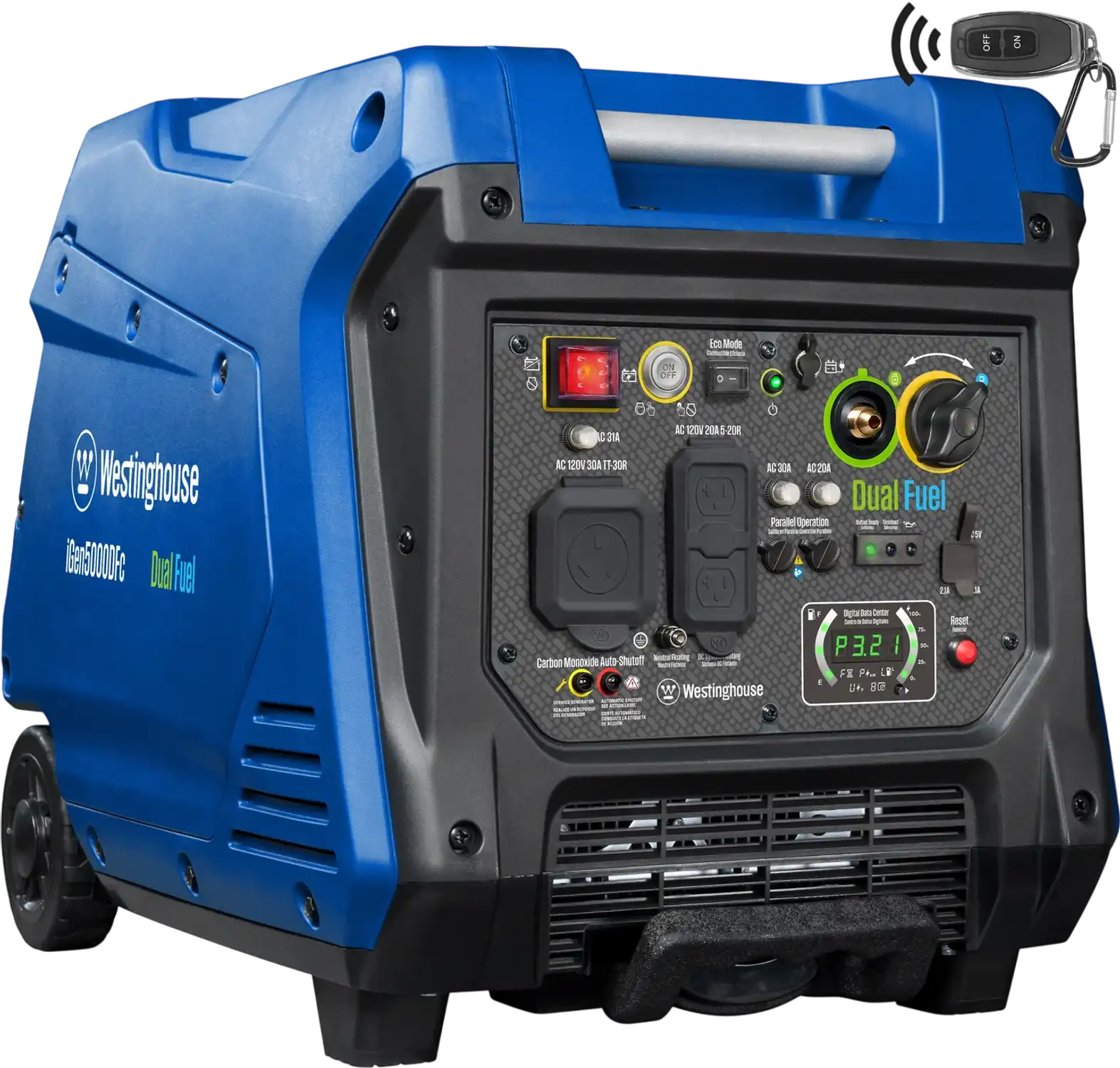
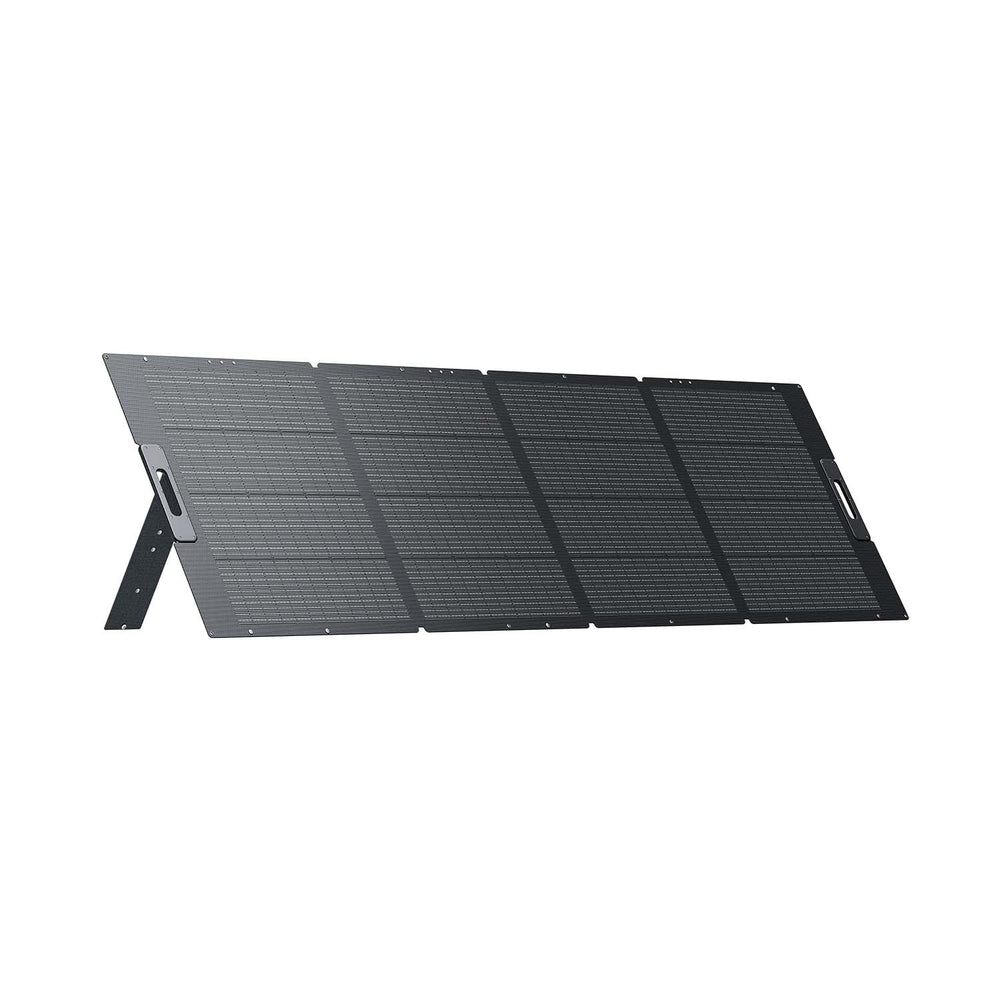
Most comparisons frame this as solar versus a generator. For anyone planning genuinely long outages or full off-grid living, that framing is wrong: the two fail in opposite conditions, which is exactly what makes them complementary. Solar produces free energy every day but cannot promise a specific kilowatt-hour at a specific moment. A generator promises exactly that, and charges you fuel for every one.
The economics of the pairing
Sizing a battery bank to survive a week of bad weather is enormously expensive, because you are paying for capacity that sits unused in every normal week of the year. Sizing it to cover ordinary conditions and adding a generator for the exceptions costs far less for the same reliability.
| Approach | Typical cost | Covers 7 days? | Weak point |
|---|---|---|---|
| Solar + large battery only | $18,000 – $30,000 | Only in good weather | A week of overcast ends it |
| Generator only | $800 – $2,500 | Yes, if fuel holds | Fuel supply, noise, no unattended running |
| Solar + small battery + generator | $5,000 – $9,000 | Yes | More components to maintain |
The hybrid covers the same week for roughly a third of the battery-only cost. That is not a marginal saving — it is the difference between a project that happens and one that stays on a spreadsheet.
How they actually work together
The battery is the hub; both sources charge it, and your loads run from it. That matters more than it sounds:
- Solar charges the battery all day and covers loads directly while the sun is up.
- The battery carries the night and the shoulders of the day.
- The generator runs only when the battery drops below a threshold — typically 20-30% — and then runs at high output for two or three hours to bulk-charge it, rather than idling all day.
That third point is where the fuel savings come from. A generator running at 25% load to follow a small household demand is badly inefficient; the same generator running at 70-80% load to push charge into a battery bank burns far less fuel per kilowatt-hour delivered. In practice a hybrid setup uses roughly a third to a half the fuel of a generator running continuously to serve the same loads.
When you genuinely need both
- Full off-grid living — nobody serious runs a homestead on solar alone through a northern winter without a backup generator
- Winter-storm outage risk — the outages most likely to last a week are the ones with the least sun and the highest heating load
- A well pump or other large motor that would need an oversized inverter and battery to start reliably on solar alone
- Medical equipment, where the cost of running out is not measured in inconvenience
- Northern latitudes, where December sun hours can be a third of June's
When you do not
If your outages are typically under 24 hours, if you live somewhere with reliable year-round sun, or if your critical load is genuinely small — a fridge, some lights, devices — a solar-charged power station on its own is simpler and enough. Adding a generator you use once every three years means storing fuel, running it monthly to keep it healthy, and maintaining a machine for an event that may not come. The power station plus panels combination covers that case.
Practical points that catch people out
Not every generator charges every battery system well. Inverter generators produce clean power that battery chargers accept happily; some cheaper open-frame generators produce a waveform that charging systems reject or handle poorly. Check compatibility before assuming any generator will do.
Dual and tri-fuel units are worth the premium here, because propane stores indefinitely while gasoline degrades in months — and a generator you only run occasionally is exactly the one likely to have stale fuel when it matters.
The safety rules do not relax because it is part of a system. A generator runs outdoors, at least 20 feet from any window, door or vent, always. Carbon monoxide is odourless and kills people every storm season. Our solar versus gas generator comparison covers the trade-offs of each in isolation.