

A bifacial panel has cells that generate from both faces, so it captures light reflected off whatever is beneath it as well as the sunlight hitting it directly. The gain is real and it is entirely dependent on the mounting: 5-25% more energy over a bright reflective surface, and close to zero flat against a dark roof.
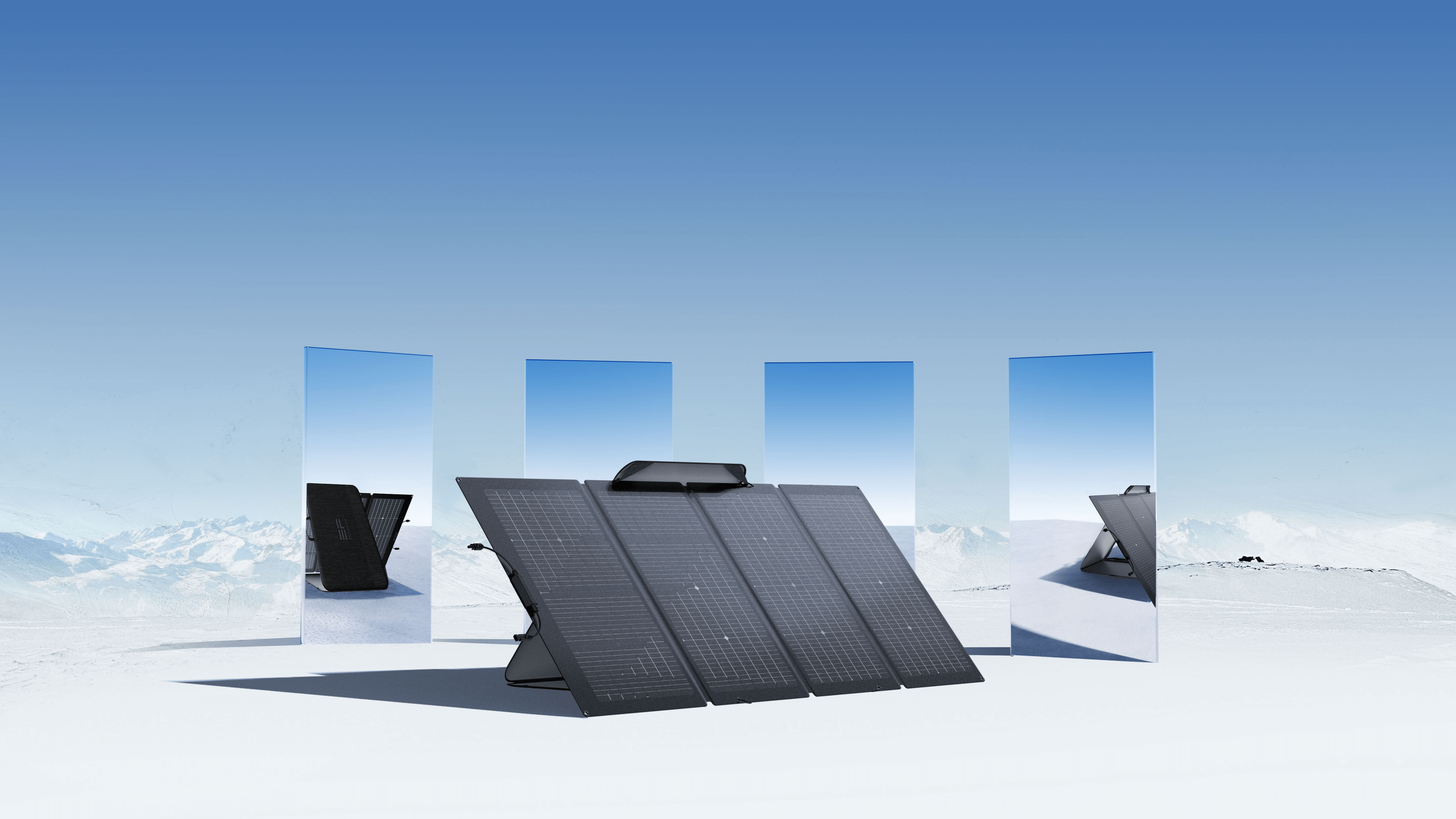
What determines the gain
Three things, and you control all of them:
| Surface beneath | Reflectivity (albedo) | Realistic rear gain |
|---|---|---|
| Fresh snow | 0.8 – 0.9 | 20 – 30% |
| White membrane or gravel | 0.5 – 0.7 | 10 – 20% |
| Light concrete | 0.3 – 0.4 | 8 – 12% |
| Grass or soil | 0.2 – 0.25 | 5 – 8% |
| Dark asphalt shingle | 0.1 – 0.15 | 2 – 4% |
| Flush against a roof | — | ~0% |
The other two factors are height above the surface — more clearance lets more reflected light reach the rear, with gains improving up to roughly a metre — and tilt, since a steeper angle exposes more of the back face.
Where bifacial genuinely pays
- Ground mounts over light gravel or a white surface — the classic case, and where the double-digit gains are real
- Snowy climates, where fresh snow is close to the most reflective surface available and the gain lands exactly when winter output is scarcest
- Flat commercial roofs with white membrane, tilted on ballasted racking
- Pole mounts, which naturally sit high with open ground beneath
- Elevated canopies — carports and agricultural structures with light surfaces below
Where it is money wasted
Flush-mounted on a pitched residential roof, which is the most common residential installation, the rear face sees a dark shingle a few inches away and contributes almost nothing. You paid a premium for a capability the mounting prevents you from using.
The same applies to a van or RV roof, where panels sit close to a surface that is often dark, and to any installation where clearance is minimal. If your panels will be flush or near-flush, buy monofacial and put the difference toward more watts.
The other things bifacial panels bring
Most bifacial modules use glass on both faces rather than a polymer backsheet. That has real consequences beyond the rear-side gain: they are more durable and better sealed against moisture, often carry longer warranties, and are noticeably heavier — which matters for roof load calculations and for handling during installation.
The frameless variants common in bifacial ranges also need specific clamping hardware. Check that your racking supports them before ordering.
The honest verdict
Bifacial is a mounting decision disguised as a panel decision. If you are building a ground mount, especially in a snowy region, it is often worth the premium and the payback is straightforward. If you are putting panels flush on a pitched roof, it is not, and the extra cost buys you durability rather than energy.
Work out your mounting first — roof, ground and pole compared — and only then decide whether bifacial has anything to offer your installation. If winter output is your constraint, the winter performance guide covers the other levers, several of which are cheaper.