

A whole-home solar and battery installation costs $25,000 to $40,000. A large power station paired with portable panels costs $2,000 to $4,000 and covers most of what households actually need during an outage. It is not the same product — but for a lot of people it is the right one, and the gap between the two is far smaller than the price difference suggests.
Why this combination works when plain solar does not
A grid-tied rooftop array shuts down the moment the grid fails, by code, even in full sun — anti-islanding protection exists so utility crews are not working on lines your panels are energising. Without a battery designed for backup, existing rooftop solar contributes nothing to an outage. We cover the mechanism in can solar panels power a house during a blackout.
A power station never had a grid connection to lose. It is an island by design, so it behaves identically whether the power is on or off. Add portable panels and it stops being a fixed reserve you drain over three days and becomes a system that recharges every morning.
Sizing the pair
Two numbers, and they are independent. The power station's capacity covers a night plus a bad-weather day. The panel wattage has to replace what you use each day, otherwise you are just draining a large battery slowly.
The rule that matters: daily panel production must meet or exceed daily consumption. A 400W panel produces roughly 1,500Wh on a good day at 75% real-world efficiency. If your critical loads draw 2,000Wh a day, one panel leaves you 500Wh short every day and the system fails on day four or five regardless of how big the battery is.
| Daily critical load | Power station | Solar needed | Real example |
|---|---|---|---|
| ~1,000 Wh (fridge, lights, phones) | 1,000 – 1,500 Wh | 400 W | BLUETTI AC180 $499 + one 400W panel |
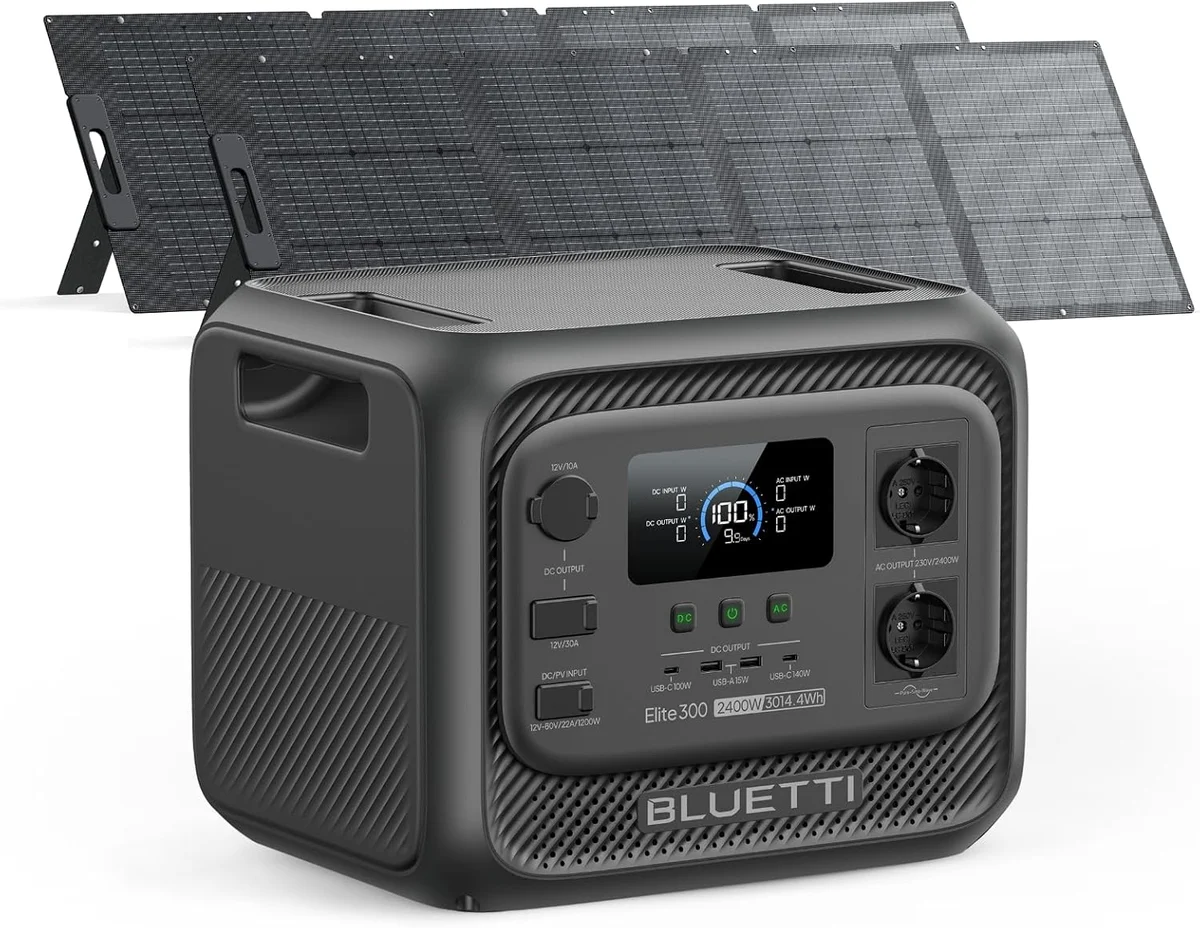
| ~2,000 Wh (+ Wi-Fi, TV, CPAP) | 2,000 – 3,000 Wh | 800 W | BLUETTI Elite 300 $1,199 + two 400W panels |
| ~3,500 Wh (+ well pump, freezer) | 3,000 – 4,000 Wh | 1,200 W | BLUETTI Elite 400 $1,399 + three 400W panels |
| ~6,000 Wh (+ furnace blower) | 6,000 Wh+ | 1,600 W+ | Whole-home battery territory — see below |
What it will not do
Be clear about the ceiling before buying. A power station setup will not run central air conditioning, an electric water heater, an electric range, or an electric dryer. Those are 3,000-5,000W continuous loads that would drain even a large unit in under an hour, and most portable units cannot deliver that output at all.
It also will not power your house through the existing wiring unless you add a transfer switch and a unit that supports it. The standard setup is extension cords to specific appliances — which is fine for a fridge and a few lamps, and awkward for a furnace.
What it does well
- Runs indefinitely in good weather rather than for a fixed number of hours
- Silent and emission-free, so it can sit indoors — unlike a generator, which must run outdoors, at distance, always
- No fuel to store, stabilise or run out of on day four when every station within thirty miles is dry
- No installation, no permit, no electrician — it works the day it arrives
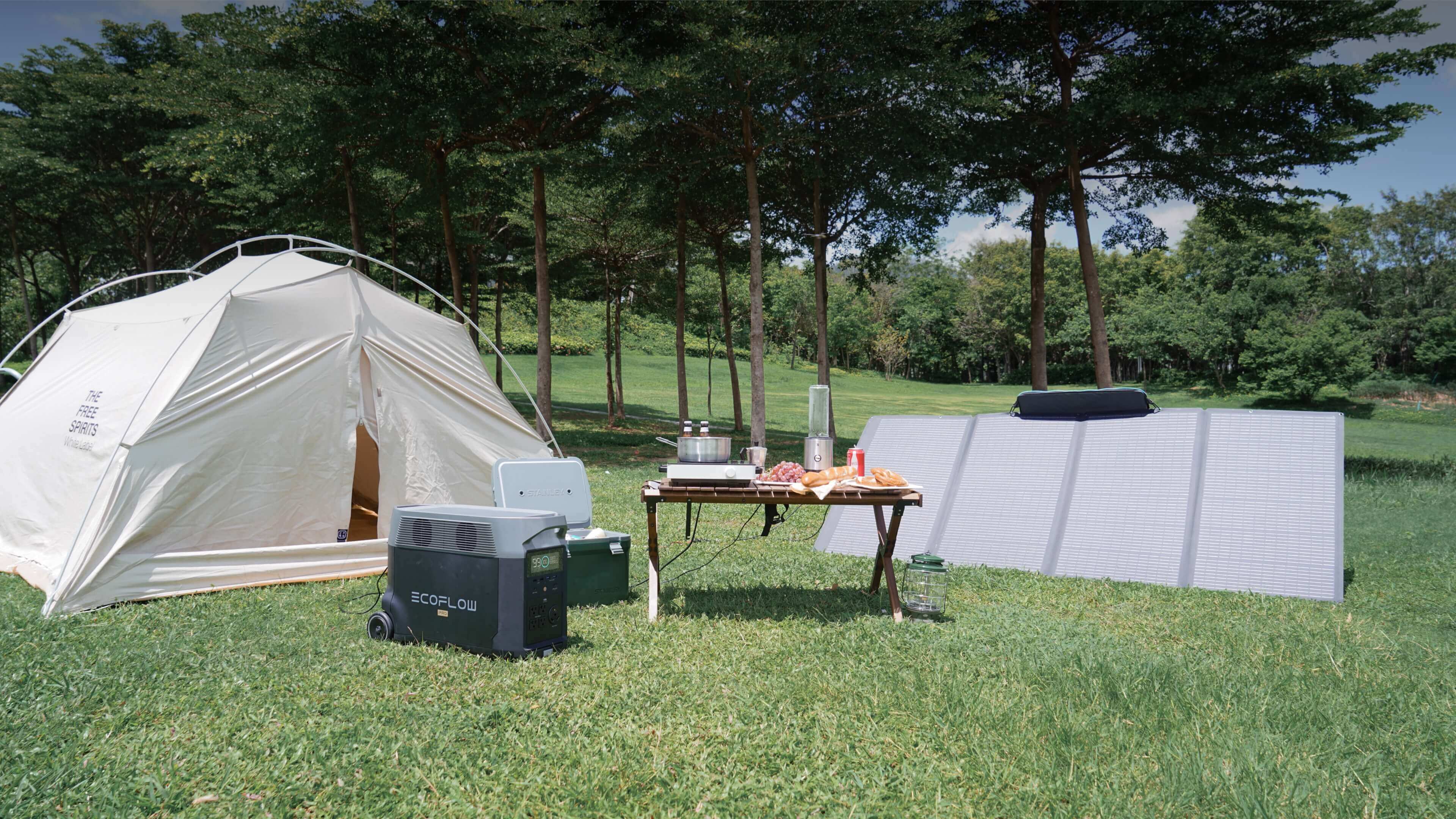
- Useful the other 360 days a year for camping, travel and outdoor work
Where the whole-home battery is genuinely the better answer
If you need central air in a summer outage, if your heating depends on an electric furnace, if you have a deep well with a large pump, or if you want the whole house to simply keep working without you moving cords around, the power station route does not stretch that far. That is the case a proper installed battery is for, and whole-house solar generator options covers the larger tier.
For everyone else, work out your real critical load first — our free wattage calculator gives you both running and surge figures — then size the pair from the table above. Most households discover their genuine outage need is 2,000-3,000Wh a day, which this approach covers comfortably for around a tenth of an installed system's cost.