

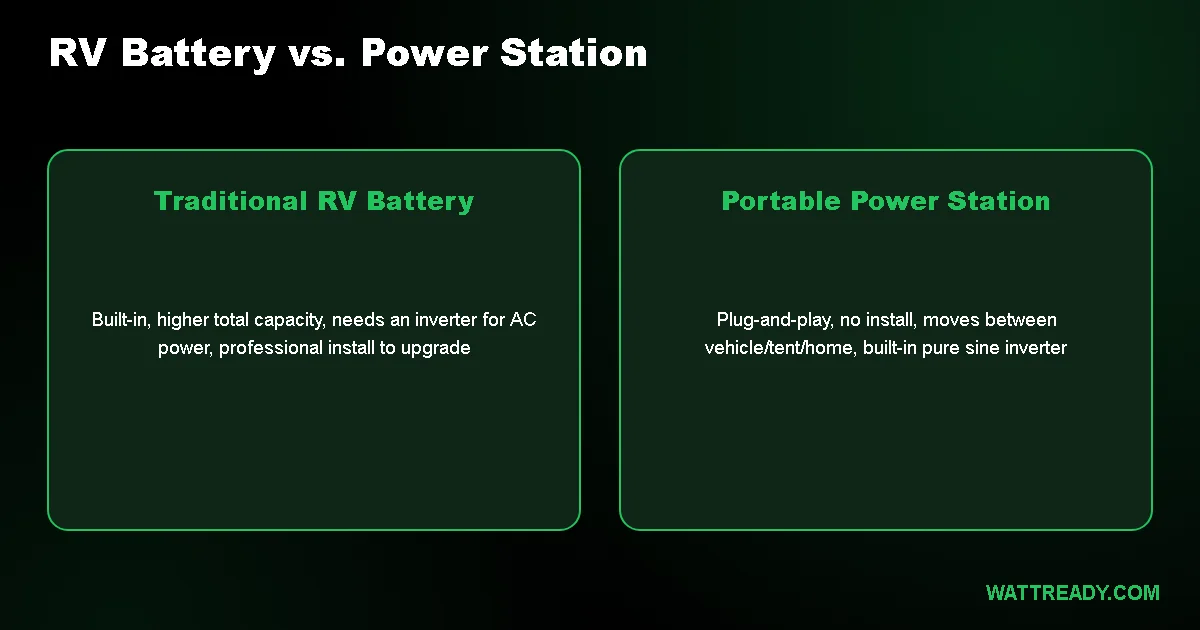
This comes up constantly for anyone outfitting a camper, van, or travel trailer: stick with (or upgrade) the RV's built-in house battery, or go with a portable power station instead? Both are valid — the right choice depends on how you actually use the rig.
The core tradeoffs
| RV House Battery | Portable Power Station | |
|---|---|---|
| Typical capacity | 1,200 - 4,800 Wh (varies widely) | 300 - 3,000+ Wh |
| AC power (110V outlets) | Needs a separate inverter | Built in |
| Installation | Professional or advanced DIY | None — plug and play |
| Portability | Fixed to the vehicle | Removable, usable anywhere |
| Typical cost | $300 - $3,000+ (battery + inverter) | $500 - $3,000+ |
| Charges while driving | Yes, via the alternator (DC-DC charger recommended) | Yes, via 12V socket or DC-DC charger |
When an RV battery makes more sense
If you're outfitting a permanent or semi-permanent rig — a van conversion, a travel trailer you tow frequently — a properly installed house battery system (paired with a real inverter and often solar) generally offers more capacity per dollar at scale, and it's built into the vehicle's existing 12V system rather than sitting separately.
When a power station makes more sense
If you want something that works today without an installation project, moves between the vehicle, a tent, and your house during a power outage, and includes AC outlets out of the box, a power station wins on flexibility. It's also the better choice if you're not committed to van life long-term and want the investment to serve double duty at home — see our camping power guide for typical weekend loads.
Can you use both?
Yes, and many serious van-life and overlanding setups do — a house battery for continuous baseline loads (lights, water pump, fridge) plus a portable power station as a flexible add-on for laptops, backup, or moving power outside the vehicle entirely. Size either path with our free wattage calculator based on your actual appliance list.