

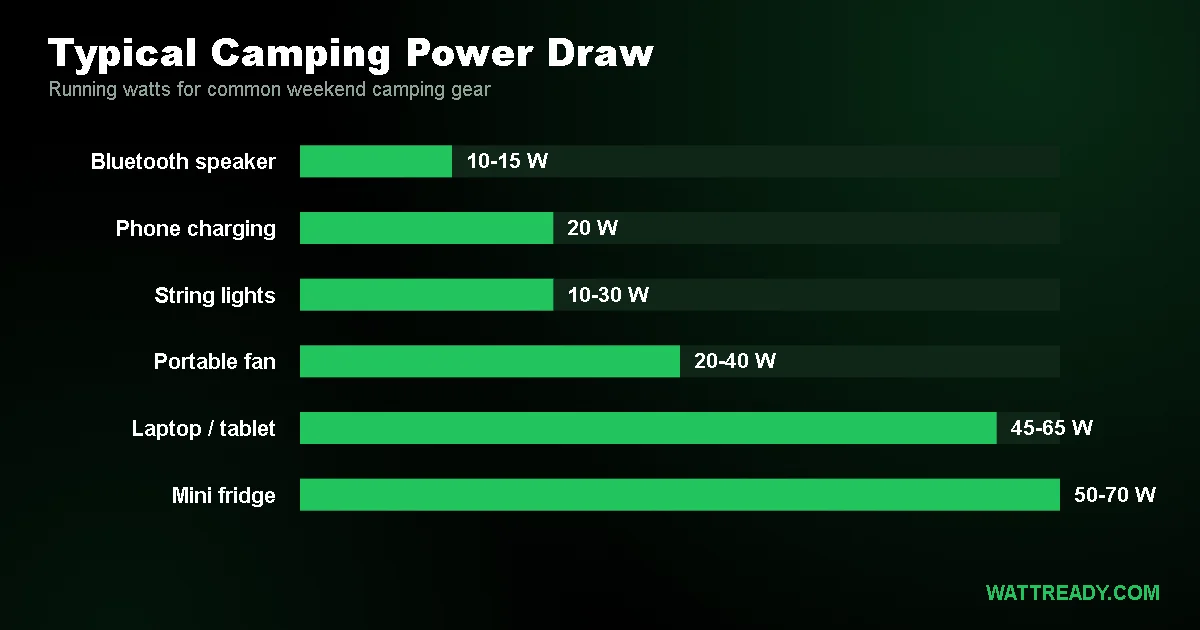
Camping power needs are smaller than most people assume — the trap is over-buying based on home-outage numbers instead of the much shorter list of things you actually run in a tent or a van for a weekend.
A realistic weekend camping load
| Item | Running watts | Typical use/day |
|---|---|---|
| String lights / lantern | 10-30 W | 4-6 hrs |
| Phone charging (x2) | 20 W | 2 hrs |
| Portable fan | 20-40 W | 3-4 hrs |
| Mini/portable fridge | 50-70 W | 24 hrs (cycles) |
| Laptop or tablet | 45-65 W | 2-3 hrs |
| Bluetooth speaker | 10-15 W | 3 hrs |
Add those up for a typical weekend list — lights, phone charging, a fan and a mini fridge — and you're looking at well under 300Wh of actual daily draw, which is why a compact 300-500Wh power station handles most tent-camping weekends comfortably, with a portable solar panel keeping it topped up if you're out for more than 2-3 days.
When you need more: van life and longer trips
The math changes once you add a full-size cooler/fridge, a CPAP machine, or you're living out of the vehicle for a week or more rather than a weekend. At that point, run your specific appliance list through our free wattage calculator — it covers mini fridges, CPAP machines and induction cooktops alongside the home-appliance list, so you get an accurate number instead of a generic "buy the biggest one" answer.
Recharging on the road
Three realistic ways to keep a camping power station topped up without a wall outlet:
- 12V car charging — plug into your vehicle's 12V socket while driving; most power stations recharge fully in 3-6 hours of driving time
- Portable solar — a 100-200W folding panel adds meaningful charge across a full day of sun, ideal for multi-day basecamp trips
- Campground power (if available) — standard wall charging is fastest when it's an option, typically 1-3 hours to full