

The question most shed-solar guides answer is whether solar beats having no power at all, which is not the decision anyone is actually making. The real comparison is solar versus trenching a buried circuit from the house — and which one wins comes down almost entirely to distance and what you plan to run.
The cost crossover
Trenching a buried feeder runs roughly $20-40 per foot installed, depending on soil, obstacles and local code. A modest shed solar system with storage runs $600-1,500.
| Distance from house | Trenching cost | Solar cost | Winner |
|---|---|---|---|
| 20 ft | $400 – $800 | $600 – $1,500 | Trenching |
| 50 ft | $1,000 – $2,000 | $600 – $1,500 | Close — depends on loads |
| 100 ft | $2,000 – $4,000 | $600 – $1,500 | Solar |
| 200 ft+ | $4,000 – $8,000 | $800 – $2,000 | Solar, clearly |
Roughly speaking, past 50-75 feet solar starts winning on cost alone, and past 100 feet it is not close. Add a driveway, a mature tree or a rock shelf in the trench path and the crossover moves much nearer the house.
Where trenching still wins regardless of distance
If the workshop runs power tools, the calculation changes. A table saw pulling 1,800W with a 3,600W startup surge, or a compressor, or a welder, needs an inverter and battery bank that costs more than the trench would have. Solar handles lighting, charging, a fan and a laptop beautifully; it handles sustained high-draw motor loads expensively.
Trenching also wins if you want the shed on the house's heating or ever plan a mini-split, and it wins on simplicity — a buried circuit needs no seasonal thought, no battery replacement in ten years and no panel clearing after snow.
A realistic shed system
| Load | Watts | Hours/day | Wh/day |
|---|---|---|---|
| LED shop lighting | 60 W | 3 | 180 |
| Phone and tool battery charging | 80 W | 2 | 160 |
| Fan or small heater (seasonal) | 150 W | 3 | 450 |
| Laptop or radio | 50 W | 3 | 150 |
| Small fridge (if present) | 50 W | 10 | 500 |
| Total without fridge | ~940 Wh | ||
| Total with fridge | ~1,440 Wh |
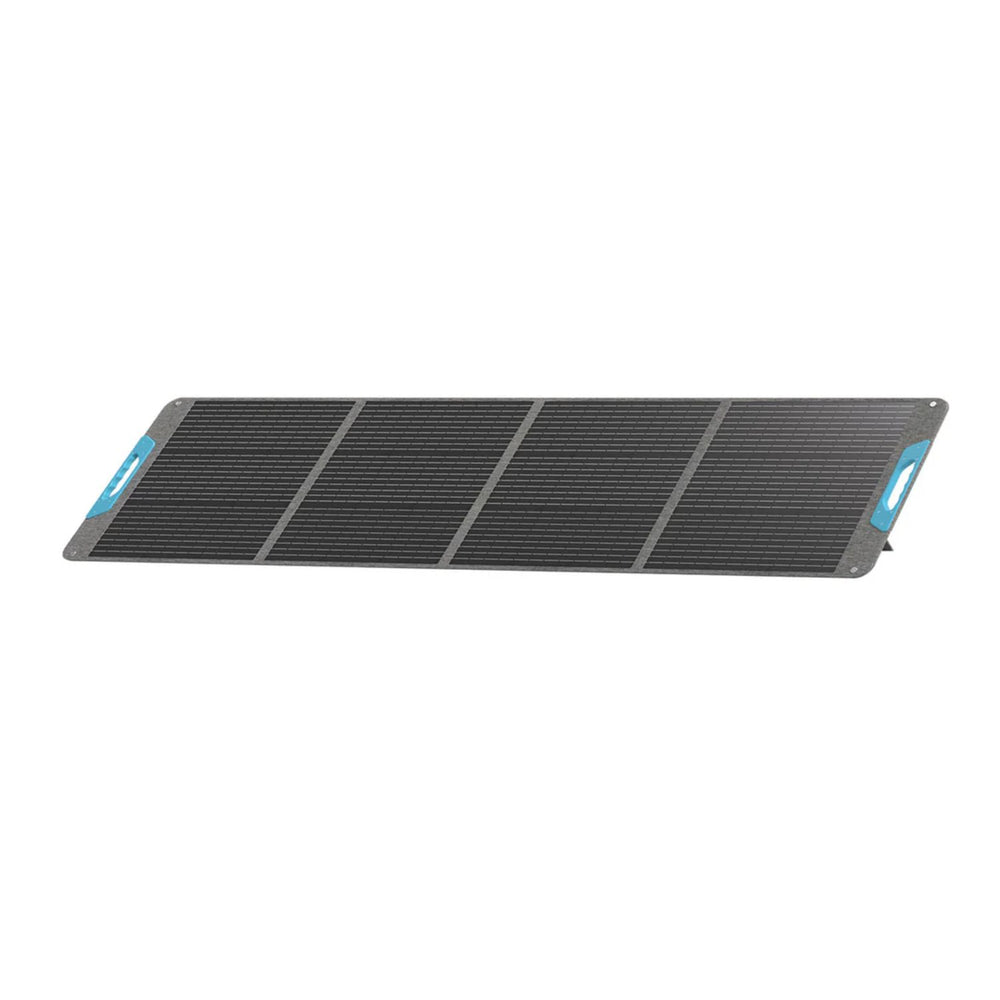
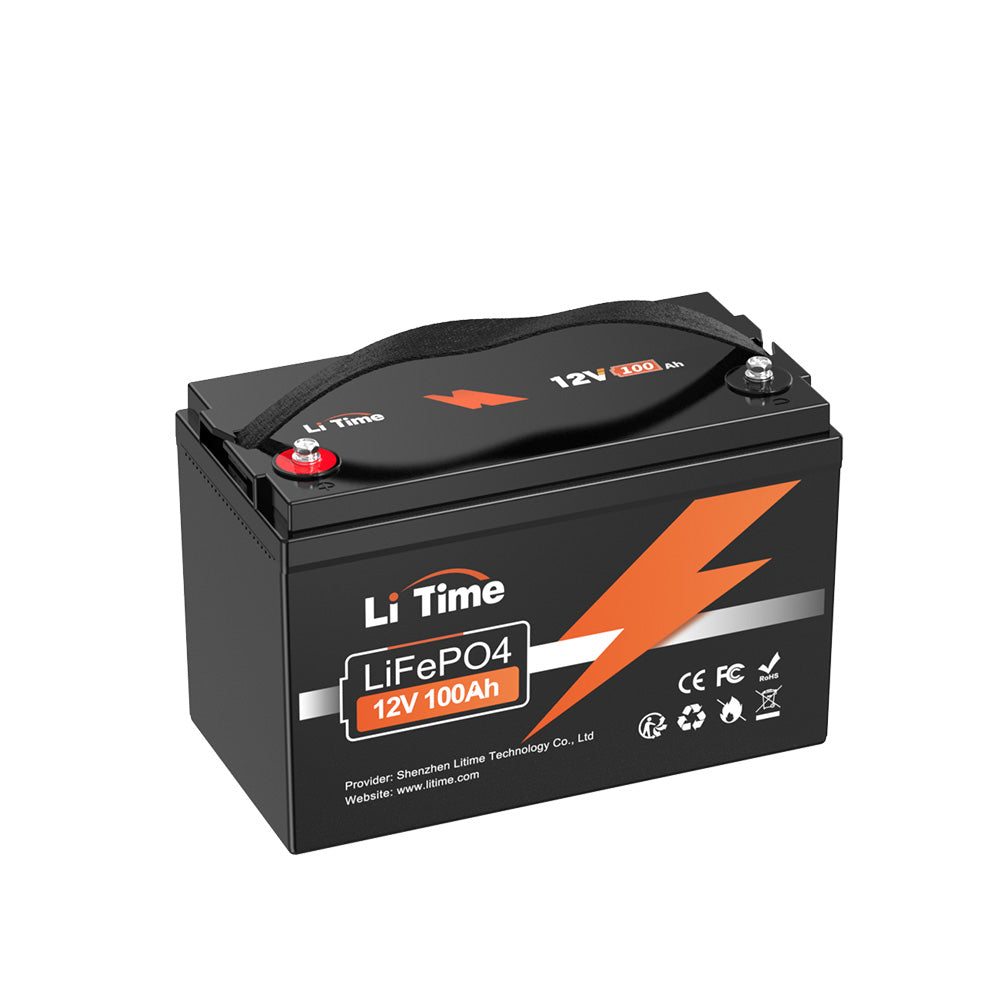
At 940Wh a day with 4.5 peak sun hours and a 0.75 derate, the array works out to 940 ÷ (4.5 × 0.75) = 280W. Two 200W panels give comfortable margin. Two days of autonomy needs about 1,900Wh of usable storage — a single 100Ah LiFePO4 battery gets close, two are comfortable.
The permit question
This is the part that most often surprises people. A standalone off-grid system on a detached structure, with no connection to your home's wiring, is usually treated far more leniently than a grid-tied installation — many jurisdictions require no permit at all. The moment you connect it to the house's electrical system in any way, it becomes a grid-tied installation with the full permitting and interconnection process.
Keeping the shed system genuinely standalone is the simplest path, and it is why off-grid DIY builds cost so much less than grid-tied ones. Confirm with your building department rather than assuming, since local amendments vary.
The simplest version
If the loads are genuinely light — lights, charging, a fan — skip the wired build entirely. A mid-size power station and a folding panel, carried out when needed and back inside when not, costs a few hundred dollars, needs no mounting or wiring, avoids theft risk, and doubles as camping and outage equipment. Wire a permanent system when the shed's use justifies it, not before.
Work out your own load list first with our free wattage calculator — shed usage varies far more between owners than household usage does.