

The wattage printed on a solar panel is measured in a laboratory at 25°C with light hitting the cells straight on at an intensity you will rarely see on a real roof. It is a comparison figure, not a promise. A 100W panel in normal outdoor conditions produces roughly 60 to 80 watts, and understanding why is the difference between a system that works and one that quietly underdelivers.
What the label actually measures
Panel wattage is rated at Standard Test Conditions (STC): 1,000 watts of light per square metre, a cell temperature of 25°C, and a specific atmospheric light spectrum. Every manufacturer uses the same conditions, which is what makes the number useful for comparing two panels — and useless for predicting output on a hot August afternoon.
Three things pull real output below the label:
- Temperature. Panels lose roughly 0.3-0.5% of output per degree above 25°C. A panel at 55°C on a roof is producing 10-15% less than its rating before anything else goes wrong.
- Angle and time of day. STC assumes light hitting the panel perpendicular. Real sunlight only does that for a short window unless you are tracking the sun manually.
- Everything downstream. Wiring resistance, the charge controller's conversion loss, and dust or pollen on the glass each take a few percent.
Together these are why the working assumption for sizing is 75-80% of rated wattage, and why the derate factor matters more than the label.
What each tier realistically produces
Assuming 5 peak sun hours — a good day in most of the U.S. — and 75% real-world efficiency:
| Rated wattage | Real output | Energy per good day | Realistic use |
|---|---|---|---|
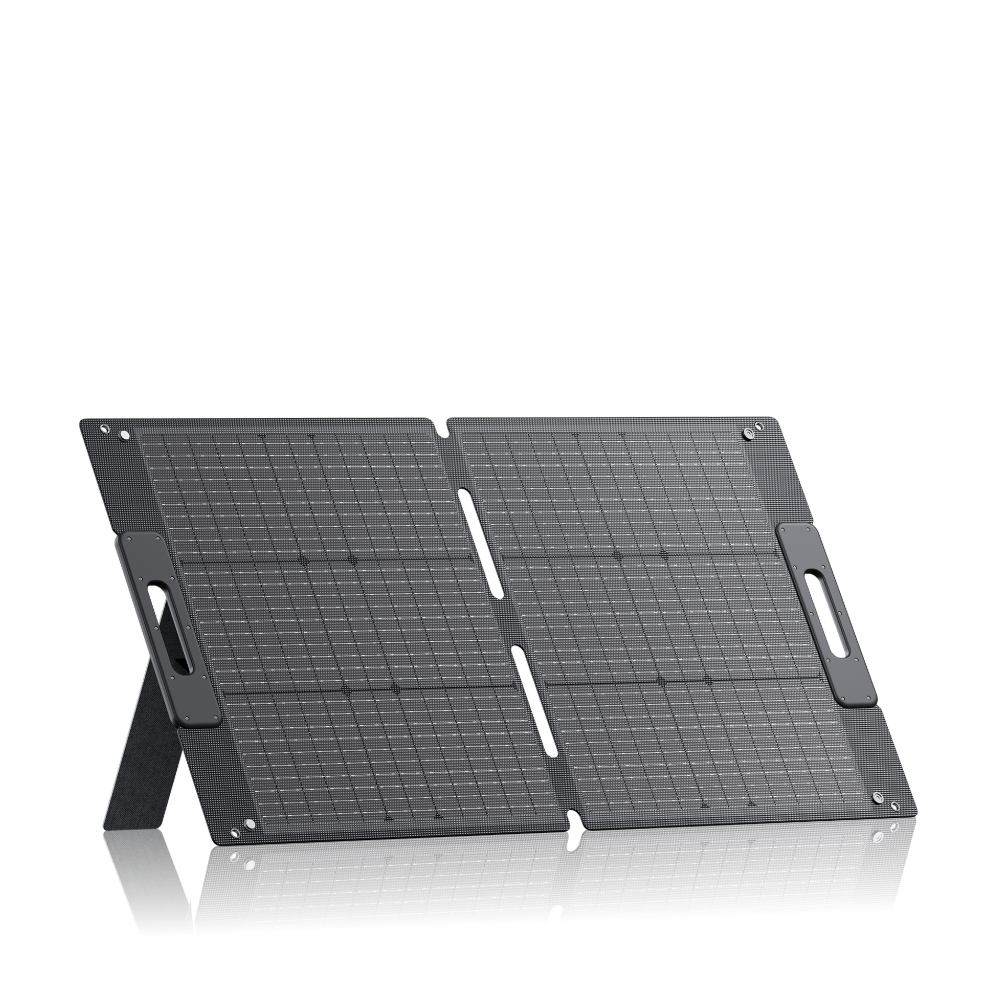
| 100W | 60-80 W | ~375 Wh | Phones, tablets, lights, slow top-up of a small power station |
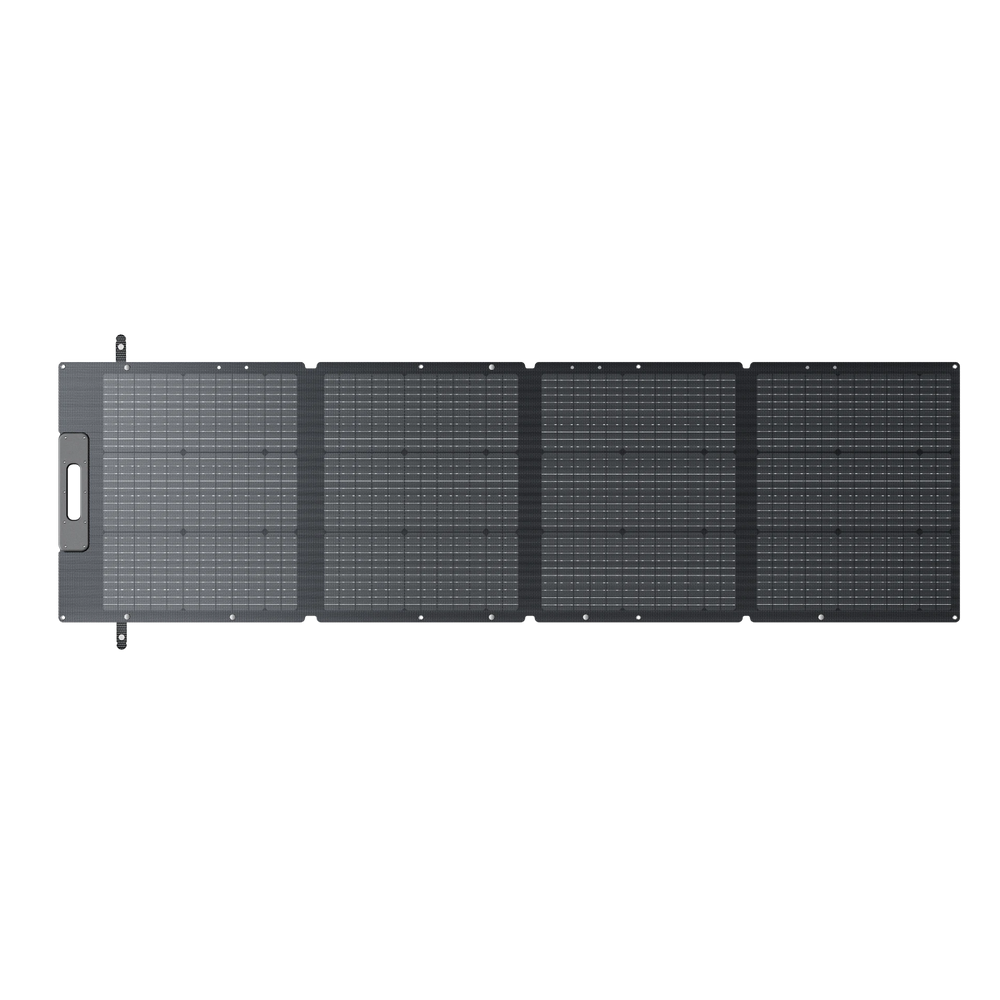
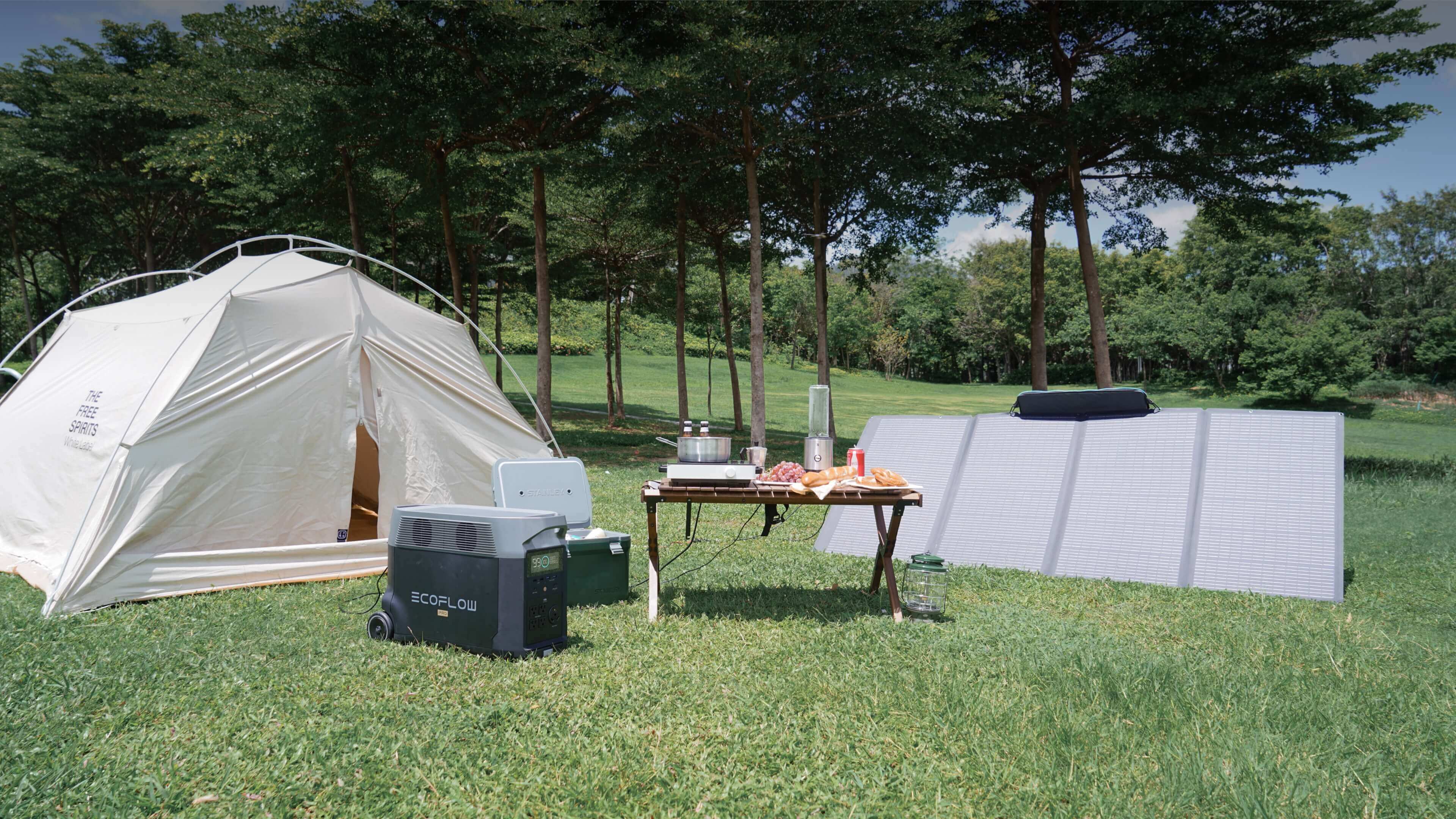
| 200W | 120-160 W | ~750 Wh | Camping and RV charging; a full recharge of a 500Wh unit |
| 400W | 240-320 W | ~1,500 Wh | Meaningful daily recharge of a 1,000-2,000Wh power station |
| 800W (2 × 400W) | 480-640 W | ~3,000 Wh | Off-grid cabin or van running a fridge continuously |
The pattern worth noticing: a 100W panel produces about 375Wh on a good day, which is under a third of what it takes to refill a 1,280Wh battery. Single small panels are for maintaining charge, not restoring it.
Watts versus watt-hours — the distinction that causes most confusion
Watts measure the rate of power at a moment in time. Watt-hours measure accumulated energy. A 400W panel does not give you 400Wh; it gives you roughly 300W of real output for however many peak sun hours you get, so about 1,500Wh across a good day and perhaps 600Wh on an overcast one.
This is why two panels of the same wattage in different climates are genuinely different products in practice — the panel is identical, the peak sun hours are not. Our watts, watt-hours and amp-hours glossary covers the full vocabulary.
Does higher wattage mean a better panel?
Not on its own. What a higher wattage rating tells you is that the panel is either physically larger or more efficient per square foot — usually the former. The figures that actually separate a good panel from a poor one are the temperature coefficient (how much output it loses as it heats up), the degradation rate (typically 0.4-0.5% a year), and the warranty behind both.
Buy on dollars per watt and on those specs, not on the headline number. Higher-wattage panels genuinely help when mounting space is limited — on a van roof or a small tiny-house roof, fewer higher-output panels is a real advantage. When space is not the constraint, it is mostly a convenience.
To turn these figures into an actual panel count, see how many solar panels do I need to run my house, or run your appliance list through our free wattage calculator first.