

A tiny house is not a small version of a normal house, electrically speaking. A conventional home averages about 30 kWh a day; a well-built tiny house typically runs on 2 to 8 kWh a day. That is a difference of roughly 5-10x, and it means most tiny houses need 800W to 1,600W of solar rather than the 8,000W a full house needs.
The two questions that decide everything
Before any math, two decisions set the scale of the system more than anything else:
- How do you heat, cook and heat water? If the answer is propane for all three, your electrical load is small and a 1 kW array is plausible. If the answer is electric for any of them, the load multiplies — an electric water heater alone can exceed the entire rest of the house.
- Is this off-grid or grid-connected? A grid-tied tiny house can undersize the array and lean on the grid on bad days. A genuinely off-grid one must be sized for the worst week of the year, not the average.
A realistic tiny-house load
| Load | Watts | Hours/day | Wh/day |
|---|---|---|---|
| 12V compressor fridge | 45 W | ~10 (cycling) | 450 |
| LED lighting | 40 W | 5 | 200 |
| Laptop and phones | 70 W | 4 | 280 |
| Water pump | 60 W | 0.5 | 30 |
| Ventilation fan | 25 W | 6 | 150 |
| Wi-Fi or cellular hotspot | 12 W | 24 | 288 |
| Induction cooktop (if electric) | 1,500 W | 0.5 | 750 |
| Total, propane cooking | ~1,400 Wh | ||
| Total, electric cooking | ~2,150 Wh |
Note how modest that is. The tiny-house builds that need 3,000W of solar are almost always the ones running electric heat, electric hot water, or air conditioning — not the ones with more gadgets.
Converting the load into panels
Panel watts = daily Wh ÷ (peak sun hours × 0.75)
| Scenario | Daily need | Sun hours | Array needed | Panels |
|---|---|---|---|---|
| Propane everything, sunny region | 1,400 Wh | 5 | 373 W | 2 × 200W |
| Propane everything, cloudy region | 1,400 Wh | 3 | 622 W | 4 × 200W |
| Electric cooking, sunny region | 2,150 Wh | 5 | 573 W | 3 × 200W |
| Electric cooking, cloudy region | 2,150 Wh | 3 | 956 W | 5 × 200W |
| Add air conditioning (summer) | 5,000 Wh | 5 | 1,333 W | 4 × 400W |
Size for your worst realistic season, not your average. An off-grid tiny house sized on May sunshine will run out of power in December.
The battery is usually the harder constraint
Panels only work while the sun is up. The battery has to carry the night plus any run of bad weather, and for a tiny house the standard target is two to three days of autonomy.
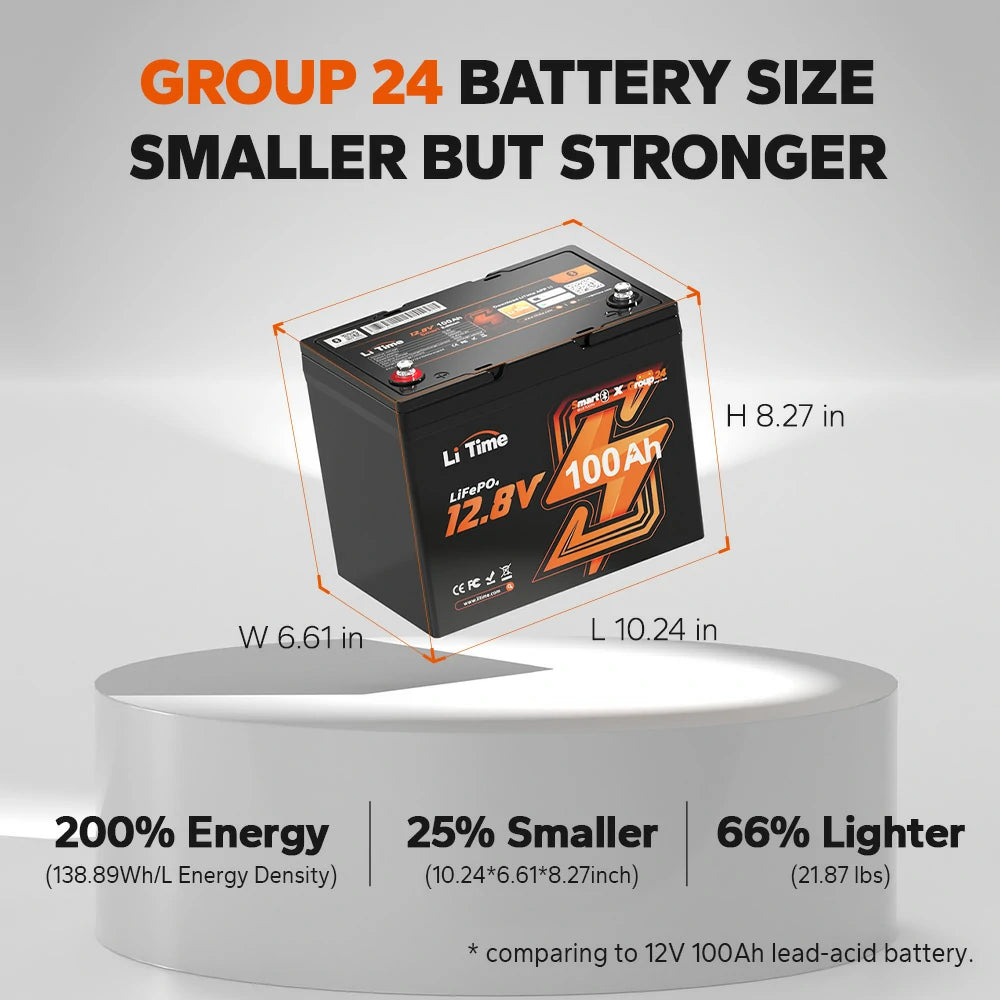
At 1,400Wh a day, two days of autonomy is 2,800Wh of usable capacity — roughly two 12V 100Ah LiFePO4 batteries. At 2,150Wh a day it is closer to three. This is typically the most expensive part of the build, and it is where cutting corners is felt daily.
Lead-acid is a false economy here: only half its capacity is usable without shortening its life, so a 200Ah lead-acid bank and a 100Ah LiFePO4 bank deliver about the same usable energy while the lead-acid one weighs three times as much and lasts a fraction as long. The full comparison is in how many watts of solar to charge a 100Ah battery.
Roof space, and why it usually runs out first
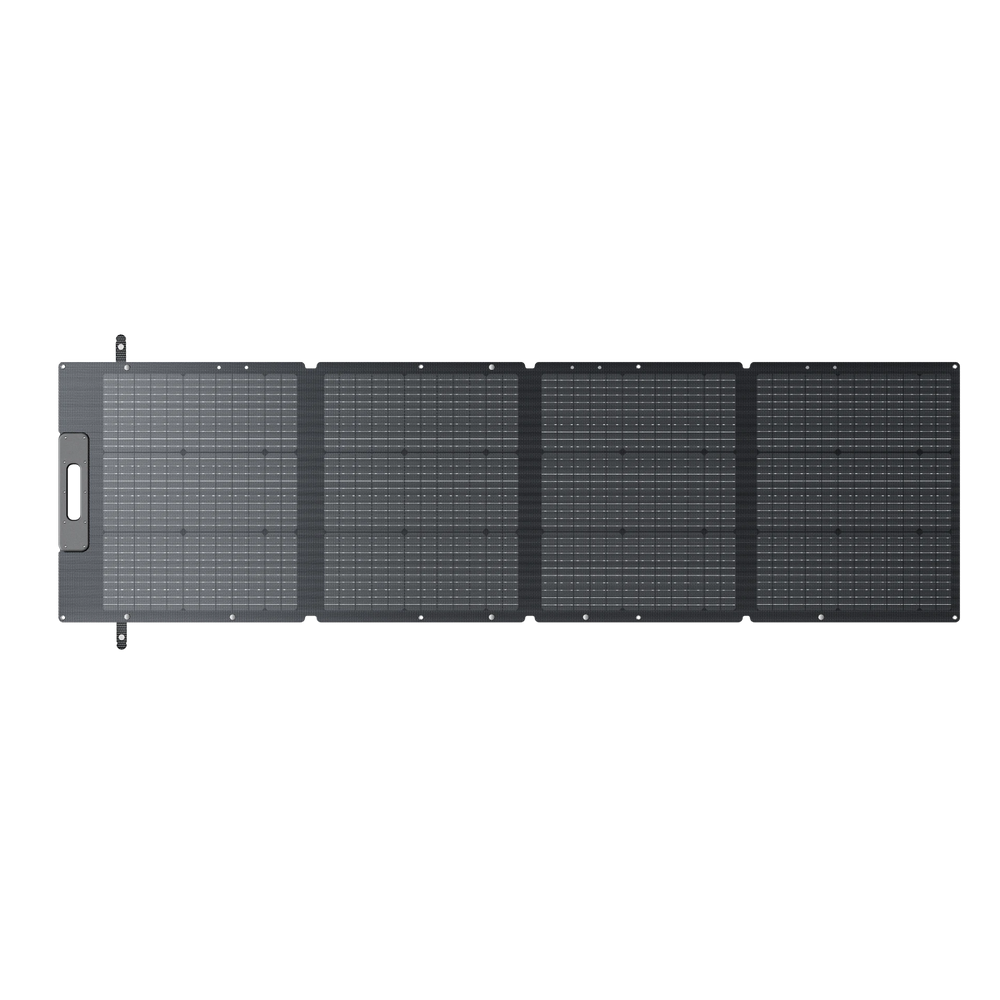
A typical tiny house on a trailer has perhaps 8 × 20 feet of roof, and much of it is taken by vents, a skylight or a loft window. Four 200W panels need roughly 80 square feet; four 400W panels need about 84 square feet for double the output. On a constrained roof, higher-wattage panels are not a luxury — they are the only way to fit the array you need.
If the roof genuinely cannot hold enough, ground-deployed portable panels used while parked are the common workaround, at the cost of setup time and theft risk.
Build your own load list with our free wattage calculator before committing to an array size — the appliance mix in a tiny house varies far more between builds than in a conventional home, and the generic numbers above will be wrong for yours in at least one line.