

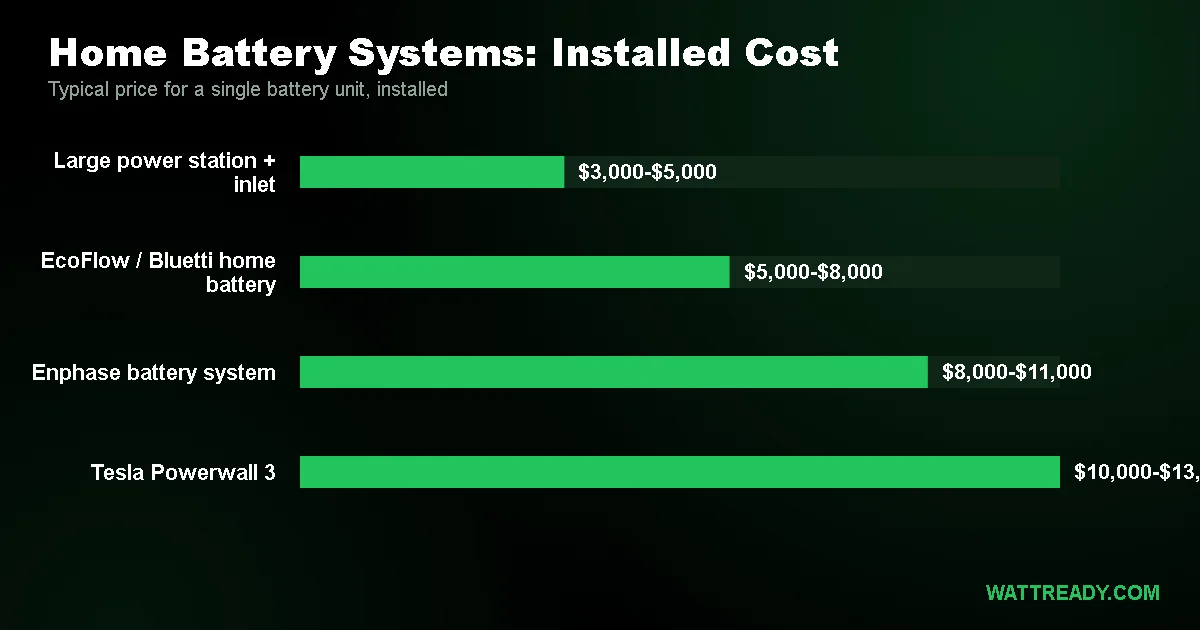
"Home battery" now spans a much wider price range than it used to — from a large power station wired into a sub-panel, to a full Tesla Powerwall installation. Here's what you're actually paying for at each tier.
The main options, compared
| Option | Usable capacity | Installed cost | Best for |
|---|---|---|---|
| Large power station (wired in) | 2-5 kWh | $3,000 - $5,000 | Essential circuits, DIY-friendly |
| EcoFlow / Bluetti home battery | 5-10 kWh | $5,000 - $8,000 | Mid-size homes, modular expansion |
| Enphase battery system | 10-15 kWh | $8,000 - $11,000 | Existing Enphase solar installs |
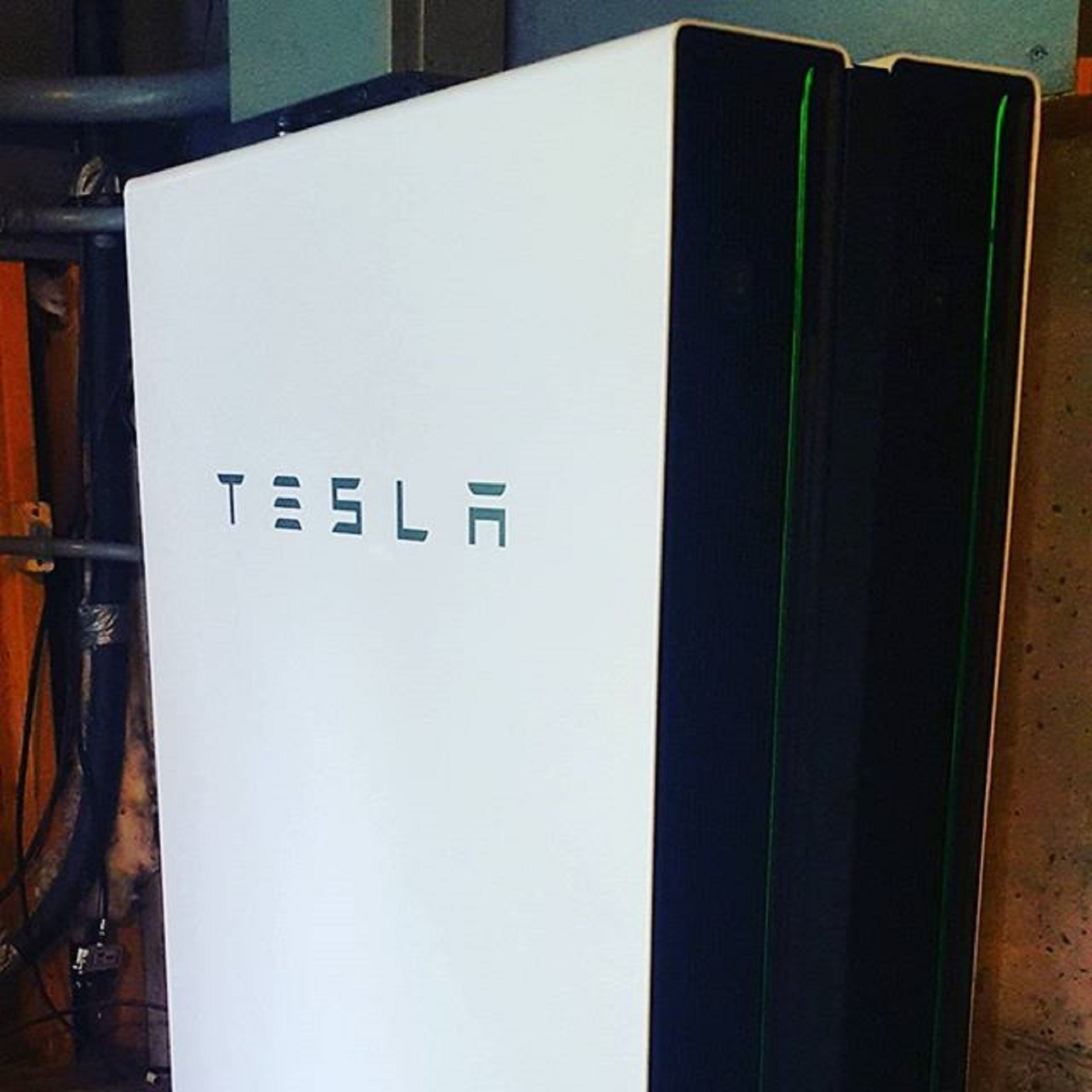
| Tesla Powerwall 3 | 13.5 kWh | $10,000 - $13,000 | Whole-home backup with solar |
Prices above are per unit, installed, in the U.S. — many households stack 2 Powerwalls or equivalent units for full whole-home coverage, roughly doubling the cost. Federal and state incentives (see below) can meaningfully offset these numbers.
What drives the price beyond the battery itself
- Existing solar: pairing a battery with solar panels you already have is cheaper than installing both from scratch
- Panel/inverter compatibility: some batteries only integrate cleanly with specific inverter brands, which can add cost if yours doesn't match
- Whole-home vs essential-circuits: backing up your whole electrical panel needs more capacity (and cost) than backing up a curated list — size your real needs first with our free wattage calculator
- Labor and permitting: varies significantly by region and by whether it's a battery-only install or paired with new solar
Is a power station a legitimate alternative?
For essential-circuits backup (fridge, Wi-Fi, some lights, medical devices) rather than whole-home coverage, a large portable power station wired to a sub-panel or used with extension cords is a genuinely cheaper path — a fraction of the cost of a Powerwall-class system, with the tradeoff of lower total capacity and no permanent solar integration.