

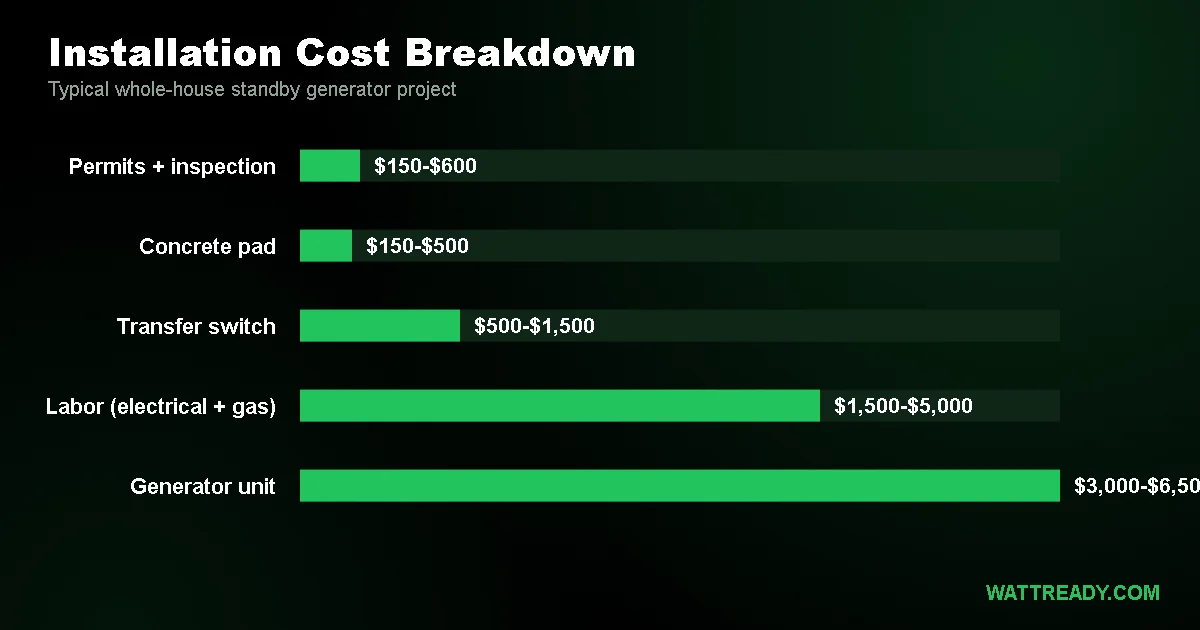
A whole-house standby generator is one of the larger home investments a homeowner can make for peace of mind — and the total cost varies more than most buying guides let on, because installation, not the generator itself, is often the bigger line item.
The full cost breakdown
| Cost component | Typical range |
|---|---|
| Generator unit (16-22kW, whole-house) | $3,000 - $6,500 |
| Automatic transfer switch | $500 - $1,500 |
| Concrete pad | $150 - $500 |
| Electrical + gas line work (labor) | $1,500 - $5,000 |
| Permits and inspection | $150 - $600 |
| Total installed cost | $5,000 - $15,000+ |
Most homeowners land in the $7,000-$10,000 range for a mid-size unit on natural gas with a straightforward install. Costs climb toward the top of the range with propane tank installation, a long distance between the generator and the gas meter or electrical panel, or a panel upgrade if your existing service can't support the transfer switch.
What drives the price up or down
- Fuel type: natural gas hookups are usually cheaper than installing a new propane tank and line
- Generator size: a 22kW whole-house unit costs more than a 12-14kW essential-circuits unit — see our wattage calculator to figure out which size you actually need before quoting the larger option by default
- Panel compatibility: older homes sometimes need an electrical panel upgrade to safely support a transfer switch, adding $1,000-$3,000
- Local permitting: costs and complexity vary significantly by city and county — some require a licensed electrician AND a licensed gas fitter, doubling the labor line
- Distance and terrain: running gas line or electrical conduit further than a typical 25-50 feet adds labor cost quickly
Is a smaller generator a cheaper, valid option?
Yes — if you don't need central AC and every circuit covered, an essential-circuits-only standby generator (10-14kW) or even a large portable generator with a manual transfer switch can cut both the equipment and labor cost substantially, sometimes to $3,000-$6,000 installed. Run your actual must-have appliance list through our free calculator first — many households discover they don't need the biggest unit a dealer quotes by default.
Get at least two to three quotes from licensed installers — the labor portion of this project varies more between contractors than the equipment cost does, and it's the single easiest place to overpay.