

There's a cruel irony to sump pump failure: it tends to happen exactly when you need it most — during a heavy storm that's also likely to have knocked out your power. A backup power plan for a sump pump isn't optional in a basement that floods; it's the single highest-consequence item on most households' outage checklist.
Sump pump power requirements
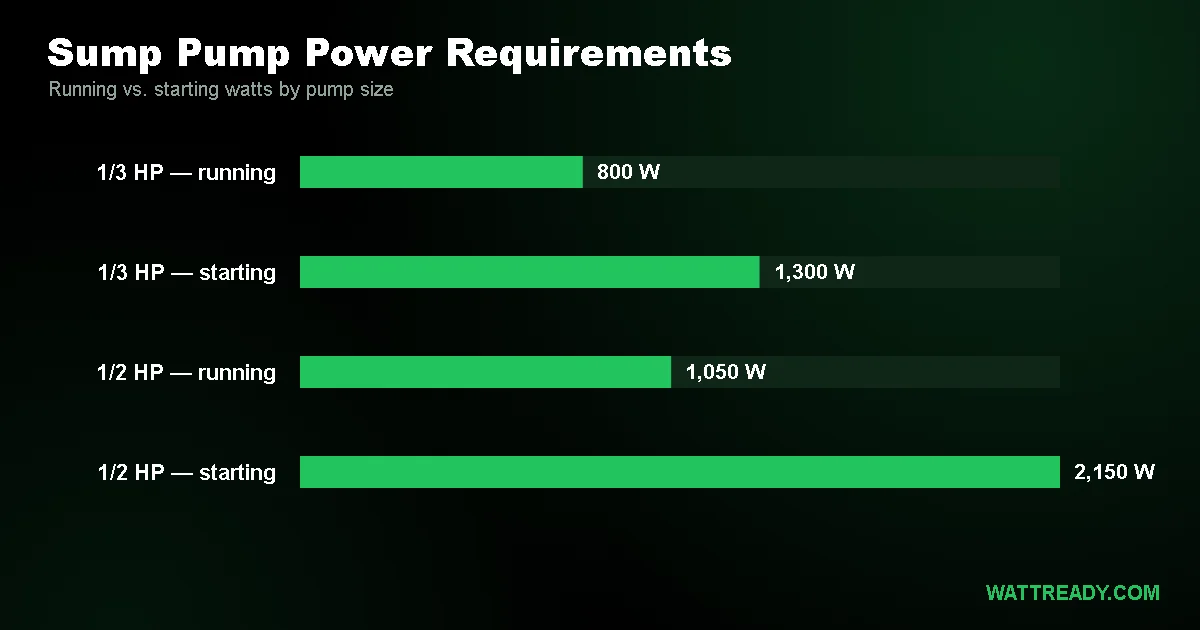
Sump pumps are motor-driven, which means the starting-watts spike matters even more here than for most appliances — undersizing the surge rating is the single most common mistake.
| Pump size | Running watts | Starting watts |
|---|---|---|
| 1/3 HP (common) | 800 W | 1,300 W |
| 1/2 HP (higher capacity) | 1,050 W | 2,150 W |
Two backup approaches
Dedicated battery backup sump pump system: a purpose-built secondary pump with its own deep-cycle battery, installed alongside your primary AC pump, that kicks in automatically if the primary loses power. This is the standard, most reliable solution specifically designed for this job — typically $200-$600 for the battery backup unit alone, more with professional installation.
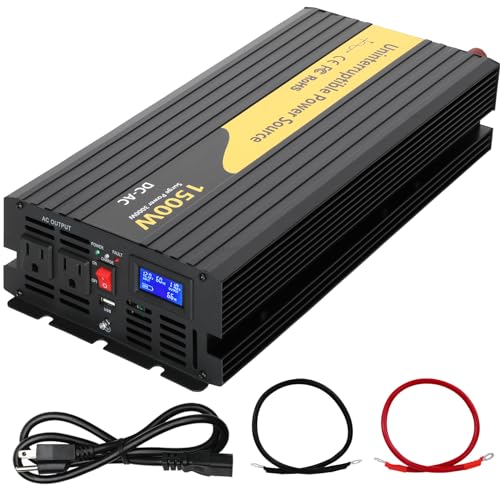
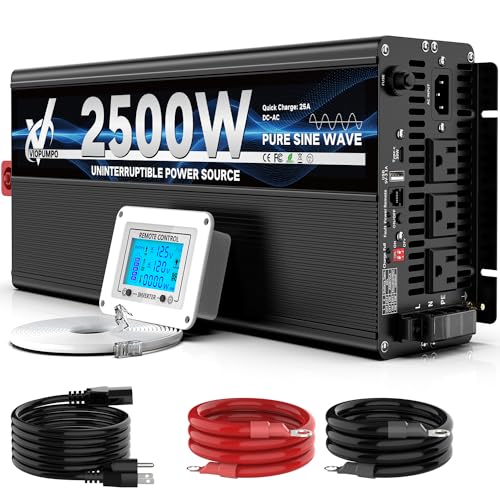
Portable power station wired to the primary pump: a power station sized to cover the primary pump's running and starting watts (see the chart above) can keep the original pump running through an outage. This works well if you already own or are buying a power station for other essentials, but check your specific pump's starting watts against the station's surge rating carefully — this is a case where undersizing has real consequences.
Whichever route you choose, confirm the numbers with our free wattage calculator — it includes both common sump pump sizes, and shows you exactly which power station capacity clears the starting-watts spike, not just the running total.
Don't overlook battery maintenance
A dedicated sump pump battery backup is only as reliable as its battery — most systems use a deep-cycle marine or AGM battery that should be tested annually and replaced every 3-5 years. A backup system with a dead battery provides a false sense of security, which defeats the entire point.